

Compression Garment Advice for Lipoedema

Professional assessment and education to help you understand which compression garments are appropriate for your stage of lipoedema and individual presentation.

Who is This Service For?
This program is suitable for women who:

Are newly diagnosed and unsure where to begin
Have been advised to wear compression but feel overwhelmed by options
Experience garment rolling, cutting in or discomfort
Notice changes in limb shape or tissue density
Want clarity before investing in custom garments

What We Cover During Your Appointment
This appointment focuses on assessment, education and structured garment guidance tailored to your presentation.
Compression Education
Recommendations are based on your stage of lipoedema, clinical goals, lifestyle and comfort preferences.
We discuss garment behaviour, comfort tolerance and practical wear considerations to ensure your compression is realistic and sustainable.
Fit & Wearability Guidance
Limb & Tissue Assessment
We assess limb shape, contour irregularities, tissue density and areas of sensitivity to help determine the most appropriate garment for you.
Individualised Recommendations
You will receive clear explanations about compression classes, knit types and how garment construction affects support and durability.
Understanding Flat Knit vs Circular Knit Compression
Why Manufacturing Matters in Lipoedema
Not all compression garments are manufactured the same way. The knitting technique directly influences elasticity, containment and long-term structural support.
Understanding this difference is particularly important in lipoedema management.
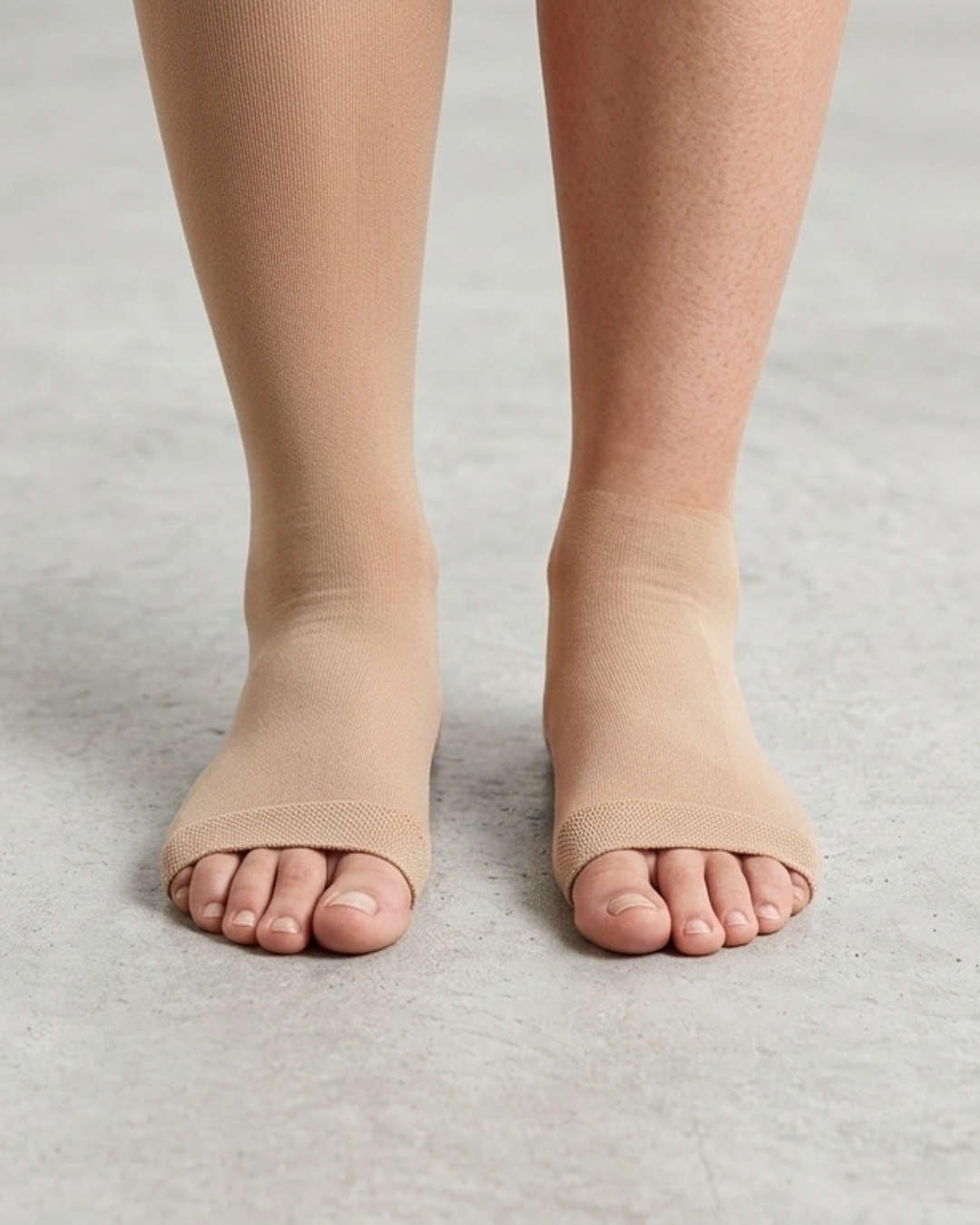
Circular Knit Compression
Circular knit garments are produced in a continuous tube using a circular knitting machine. They have no seam and are typically thinner and more elastic.
They are generally:
-
Circular knit garments contain integrated elastane fibres that allow the fabric to stretch more easily. This flexibility enables the garment to move comfortably with the limb during daily activity.
-
The seamless construction creates a smooth, uniform surface against the skin. This often makes circular knit garments more discreet under clothing.
-
Because the fabric is thinner and more elastic, circular knit garments are generally easier to put on and remove. This may be beneficial for individuals with reduced strength or mobility.
-
Circular knit works best when limb shape is relatively even and tissue is soft. It may provide adequate support when there are no significant contour irregularities or dense nodular areas.
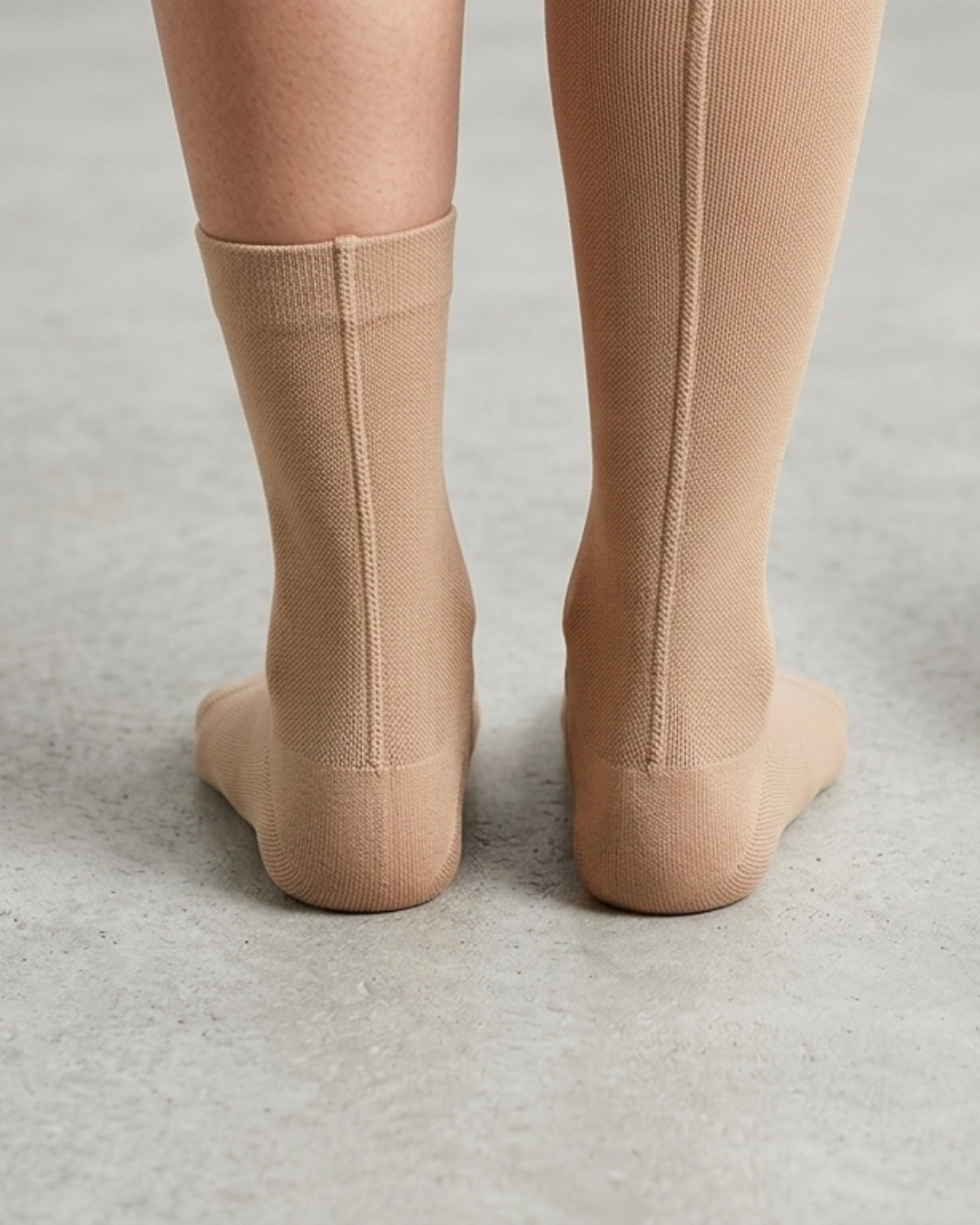
Flat Knit Compression
Flat knit garments are knitted as a flat panel and sewn together, creating a seam. This allows for greater control over stitch density and structural support.
They are typically:
-
Flat knit garments are manufactured with lower elasticity, creating a more structured fabric. This firmness provides stronger resistance against tissue expansion.
-
The denser stitch construction helps the garment maintain its shape during wear. This reduces the likelihood of the fabric stretching into skin folds or uneven contours.
-
Because stitch tension can be adjusted during production, flat knit garments can be shaped more precisely. This allows them to accommodate lobules, contour changes and asymmetry more effectively.
-
Flat knit provides consistent compression over time due to its structured construction. This stability supports ongoing containment of dense or nodular tissue.
There is no universal solution. Compression selection depends on:
• Stage of Lipoedema
• Limb shape and contour
• Tissue density
• Comfort tolerance
• Lifestyle requirements
• Clinical management goals
Compression is not simply about tightness. It is about structure, containment and long-term wearability. The best garment is one that provides appropriate support and the one that you will wear.
Choosing the Right Compression
Frequently Asked Questions
-
Yes. We provide professional guidance on sizing and garment structure. We refer out for custom fittings.
-
Our recommendations are based on clinical suitability rather than brand preference. We prioritise structure, wearability and performance over marketing claims.
-
Yes. Compression Garment Advice is offered as a standalone appointment focused solely on garment assessment and education. This service is currently coming soon.