

What is Lipoedema?
Learn about the symptoms, diagnosis, and treatment options for lipoedema.
Understanding Lipoedema
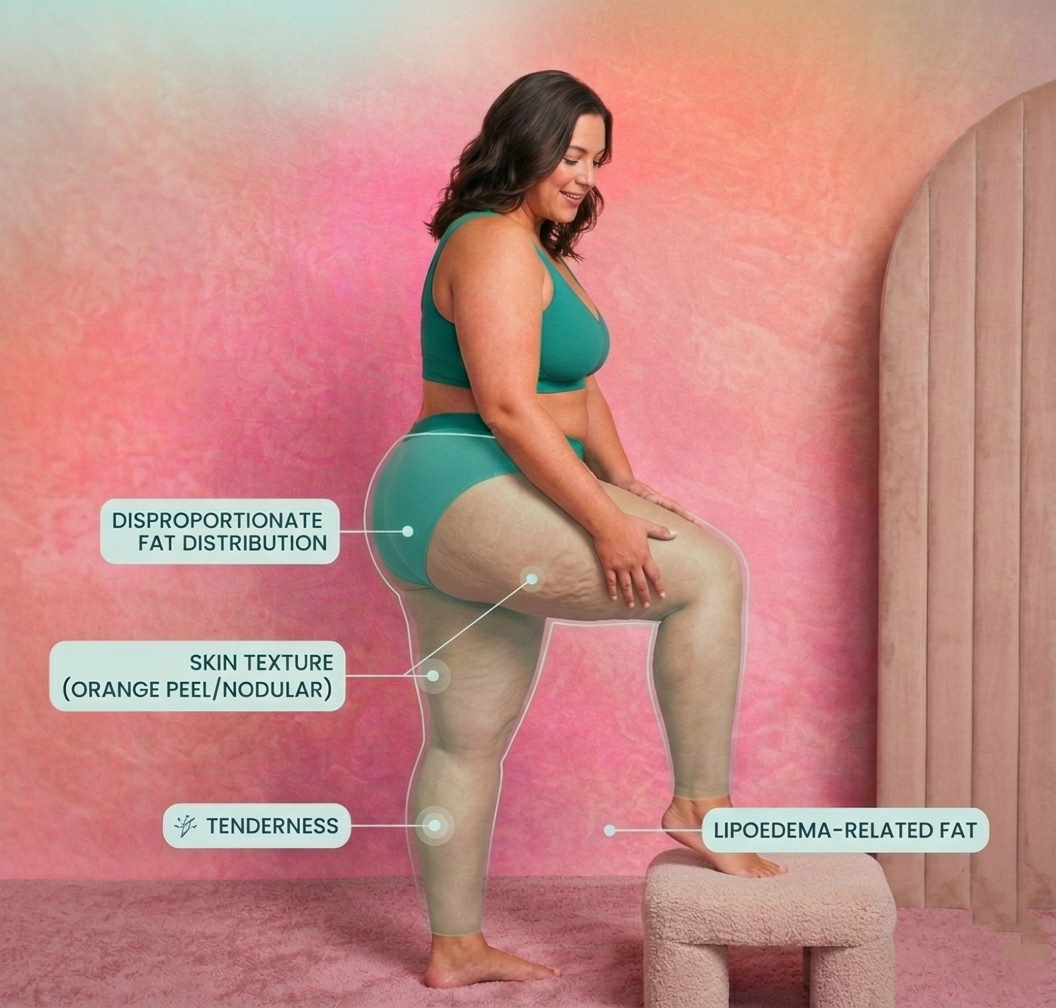
Lipoedema is a chronic and progressive adipose (fat) and connective tissue disorder that almost exclusively affects women. It is characterised by the abnormal accumulation of fat tissue, most commonly in the legs, hips, buttocks, and sometimes the arms.
Unlike general weight gain, the fat associated with lipoedema is resistant to diet and exercise and often causes discomfort, tenderness, and easy bruising.
Lipoedema commonly develops during periods of hormonal change, such as puberty, pregnancy, or menopause, and is believed to have a genetic component, meaning it can run in families.
Because awareness of lipoedema is still limited, many women are misdiagnosed or dismissed, often being told their symptoms are related to weight or lifestyle.
Early recognition is important to support appropriate management, symptom relief, and long term care.
Key Characteristics of Lipoedema include:
• Symmetrical fat distribution in both legs and sometimes the arms
• Column-like shape of the legs from hips to ankles
• Feet and hands are usually unaffected, creating a noticeable “cuff” at the ankles or wrists
• Painful or tender fat tissue, especially when pressure is applied
• Easy bruising without significant trauma
• Fat may feel soft, rubbery, or nodular under the skin
• Disproportion between the upper and lower body
• Heaviness or pressure in the affected limbs

Lipoedema vs. Lymphoedema
Understanding the Difference
Although lipoedema and lymphoedema can look similar, they are two distinct medical conditions with different causes, patterns and management approaches. Misdiagnosis is common, particularly for women with lipoedema who are often told they have lymphoedema or “just obesity.”
At Rubenesque Lipoedema Clinic, accurate assessment is the foundation of effective care.
LIPOEDEMA
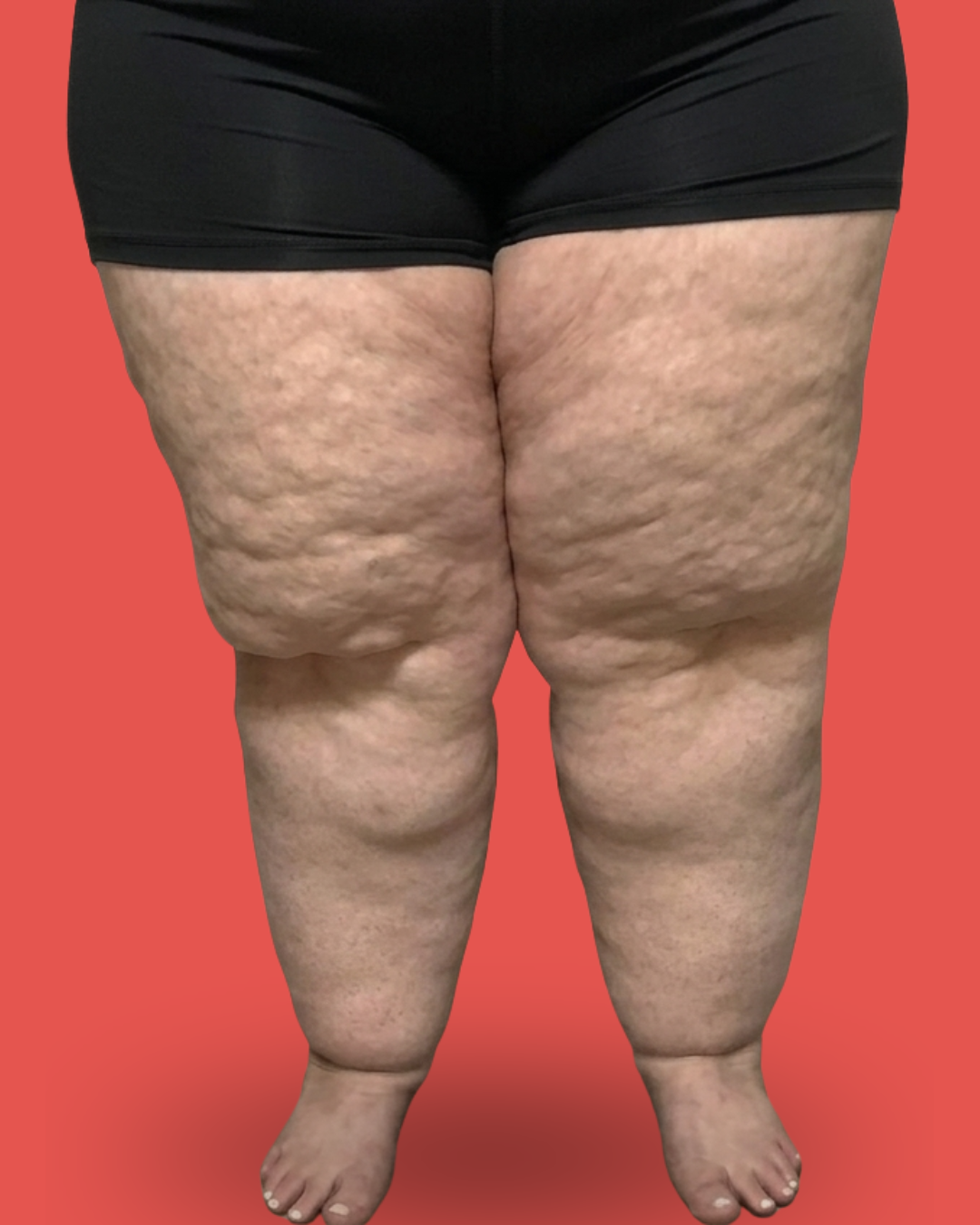
Lipoedema is a chronic adipose (fat) tissue disorder that almost exclusively affects women. It involves an abnormal accumulation of often painful fat tissue that commonly occurs in the lower and upper parts of your body. Including, your lower and upper legs, your butt and hips, sometimes your stomach. You won't find Lipoedema in your hands or feet.
It often develops during times of hormonal change such as puberty, pregnancy or menopause.
Symmetrical enlargement of both legs
Column-like shape from hips to ankles
Shelving at the hips
Feet typically spared (the “ankle cuff” sign)
Painful or tender to touch
Easy bruising
Fat may feel rubbery, doughy or nodular
Can progress to fibrosis (firm, scar-like tissue)
Unlike general weight gain, lipoedema fat does not respond predictably to diet and exercise. Weight loss may occur in other parts of the body while the affected areas remain unchanged.
Lipoedema is not caused by overeating or inactivity.
Key Features of Lipoedema
LYMPHOEDEMA
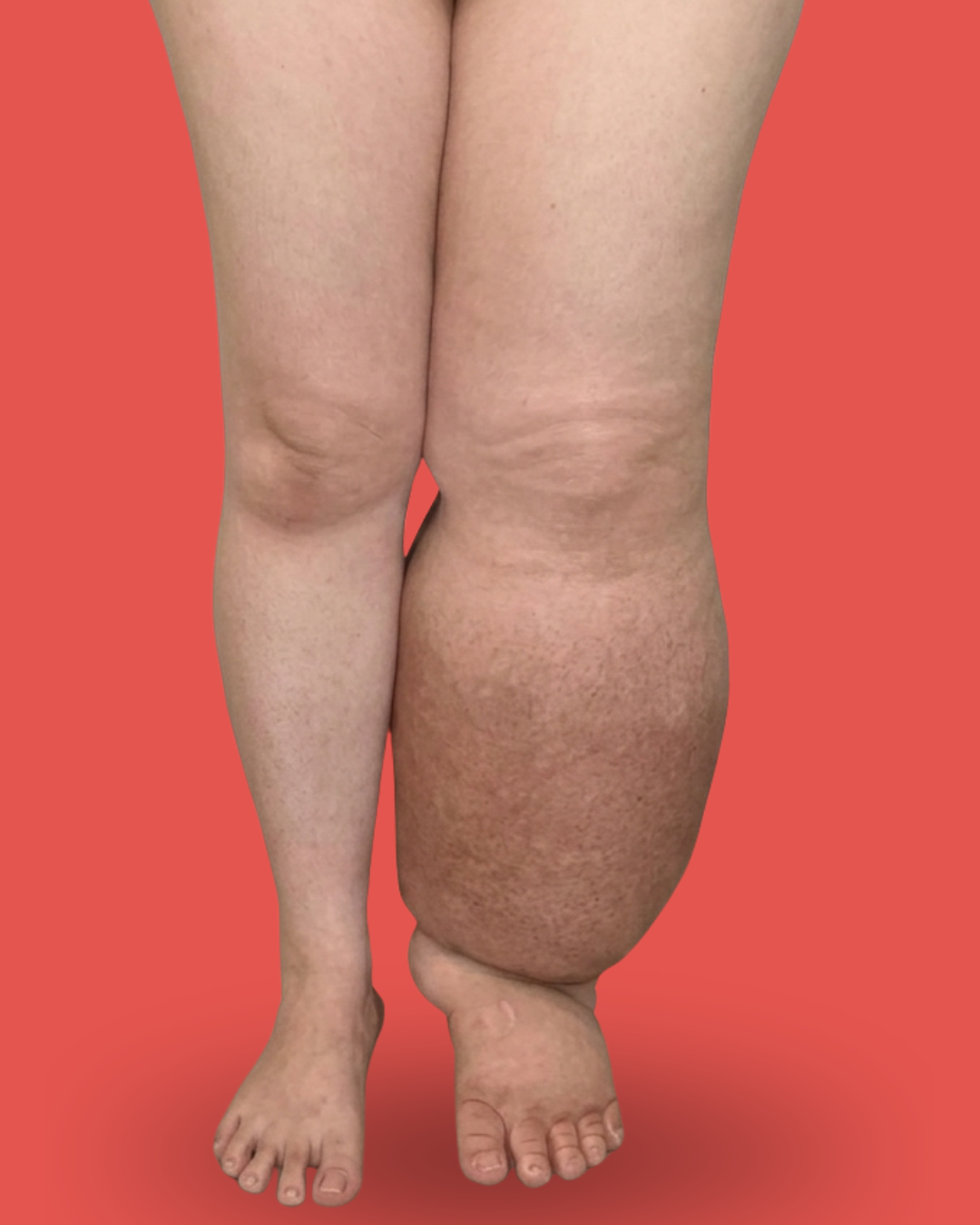
Lymphoedema is caused by damage to or dysfunction of the lymphatic system, resulting in a build-up of lymphatic fluid in the tissues.
This fluid accumulation leads to swelling that can worsen over time if untreated.
Often affects one limb (may affect both, but asymmetrically)
Swelling includes the feet and toes
Pitting oedema (skin dimples when pressed) in early stages
Heaviness or tightness
Skin thickening over time
Increased risk of infection (such as cellulitis)
Lymphoedema may be:
Primary (genetic or congenital), or
Secondary, following cancer treatment, surgery, radiation, trauma or infection.
Key Features of Lymphoedema

Can someone have both?
Yes. In later stages, lipoedema can place strain on the lymphatic system, leading to a combined presentation sometimes referred to as lipo-lymphoedema.

Our goal is to ensure you feel validated, informed and supported — especially if you have previously been dismissed or misdiagnosed.
If you can relate to:
legs feeling like concrete
legs feeling heavier after exercise
waist is considerably smaller than hips
In order to get any trousers to fit your hips they are way too big for your waist
Tenderness when skin is compressed or poked
You regularly exercise but the shape of your lower body doesn’t really change
You know you have calf muscles but they are ill defined when you flex
There are other women in your family with the same shape as you
It looks like cellulite when you squeeze your skin.
Then you may have Lipoedema.
Although there isn’t a cure for Lipoedema, there are treatments and self care that can help you to feel better.